 60 pieces · Nature
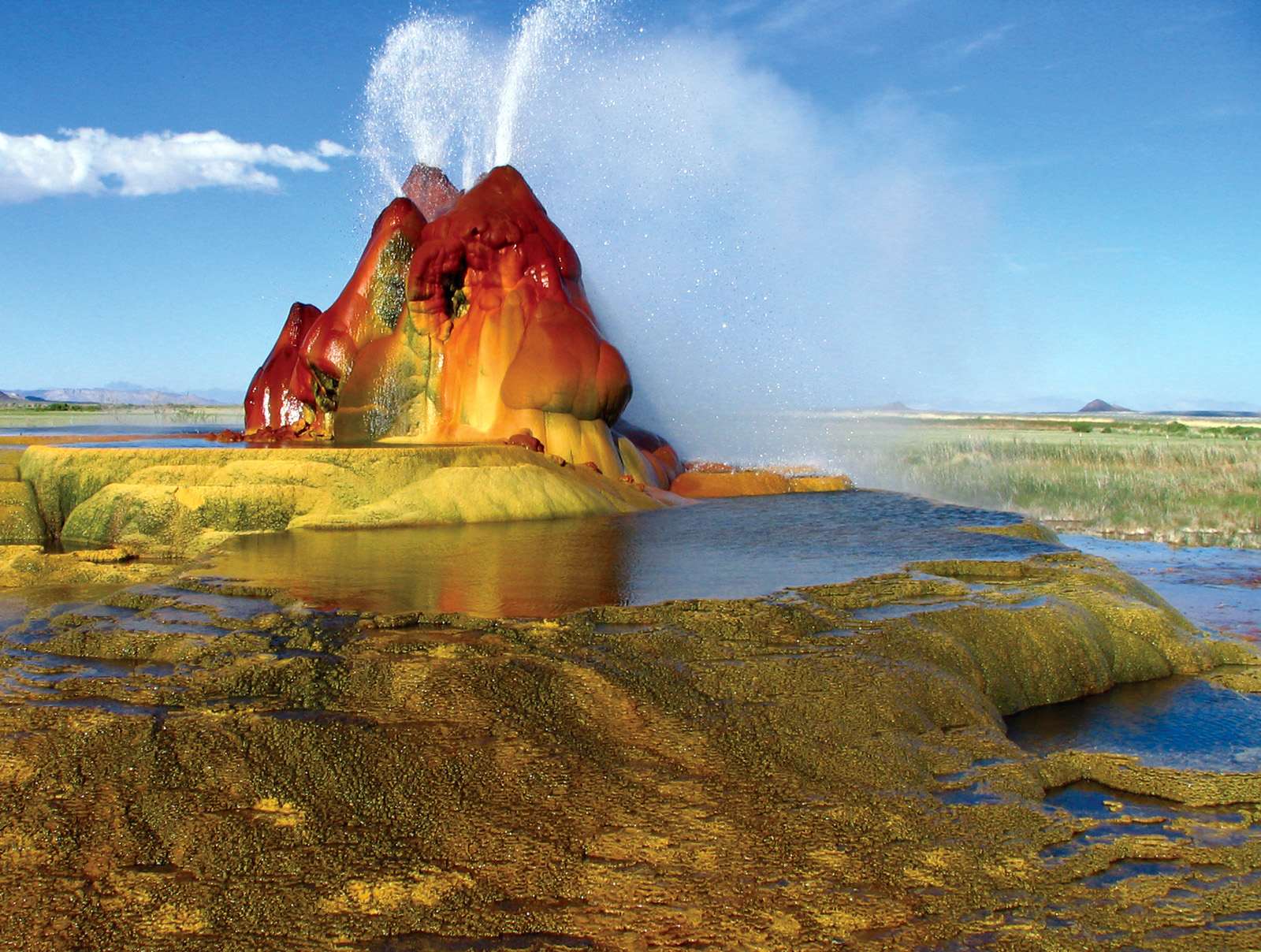
Photo by Jeremy C. Munns, public domain, via Wikimedia Commons. Fly Geyser on Fly Ranch in Washoe County, Nevada, a multicoloured travertine mound built by thermophilic algae and mineral-rich geothermal water.
PuzzleBeat
Fly Geyser, Nevada
Enjoy this nature scene as a free online jigsaw. Pick your piece count and start solving in your browser.
This nature jigsaw runs entirely in your browser. Choose difficulty on the play screen, use the optional timer to race your best score, or upload a personal photo for a custom puzzle anytime.
No download, no account — just tap play and start placing shaped pieces on the board.
Fly Geyser, Nevada
Fly Geyser sits on Fly Ranch in Washoe County, Nevada, about 20 miles north of Gerlach on the edge of the Black Rock Desert. It isn't a fully natural feature in the way a hot spring is — it exists because of two accidents of drilling. The first well, sunk in 1916 while searching for irrigation water, struck near-boiling geothermal water instead and was abandoned, leaving behind a small calcium-carbonate cone. In 1964, a geothermal energy company drilled a second well nearby; the water wasn't hot enough for power generation, so the well was capped, but the seal later failed. Pressure from that second well took over, drying up the original geyser and building the cones and terraces seen today.
The mound itself is a travertine formation, built from calcium carbonate and silica dissolved out of the geothermal water and deposited as it evaporates. Researchers who have studied the site report unusually high silica content, which has let quartz form inside the geyser far faster than the roughly 10,000 years it normally takes — one scientist who has examined geysers elsewhere called Fly Geyser unlike any other she had studied. Water constantly jets from several conic openings on the mound, reaching about 5 feet into the air, and has built 30 to 40 travertine pools spread across roughly 74 acres. The vivid greens and reds across the mound come from thermophilic algae that thrive in the hot, mineral-rich water.
As a jigsaw, the mound is the puzzle's centrepiece and its hardest region — the mottled reds, oranges and greens shift gradually rather than in sharp blocks, so pieces are best sorted by subtle hue before fitting. The flat blue sky and the still pools reflecting it are the fastest sections to place, and make good anchors to build outward from toward the textured mound and the pale desert grasses at the frame's edges.
How to play
- Tap Play Fly Geyser, Nevada puzzle to open the puzzle board, then choose your piece count and difficulty.
- Drag pieces from the tray onto the board and snap them into place until the full image is complete. Works with mouse on desktop and touch on mobile.
- Use the Preview button on the play screen to peek at the full reference image whenever you need a hint.
- When you finish, check your solve time on the completion screen and share it with friends to see who can beat your record.
Frequently asked questions
- Where is Fly Geyser?
- It's on Fly Ranch in Washoe County, Nevada, about 20 miles (32 km) north of the town of Gerlach, near the edge of the Black Rock Desert. The site is privately owned, currently by the Burning Man Project, which purchased the 3,800-acre ranch in 2016.
- Is Fly Geyser a natural geyser?
- Not entirely. It formed from two well-drilling accidents — the first in 1916 while searching for irrigation water, the second in 1964 by a geothermal energy company — rather than from a fully natural vent. The mineral deposition that built its colourful cones and pools, however, is an ongoing natural process.
- What causes the bright colours on the mound?
- Thermophilic algae that thrive in the hot, moist, mineral-rich water give the travertine mound its brilliant greens and reds. The mound itself is built from calcium carbonate and silica that precipitate out of the geothermal water as it evaporates.
- Can visitors see Fly Geyser in person?
- Yes, but only on guided nature walks. Fly Ranch offers small, guided three-hour walks from April to October each year, run by the nonprofit Friends of Black Rock–High Rock, with ticket proceeds treated as donations supporting the ranch and the organisation.