 30 pieces · City
PuzzleBeat
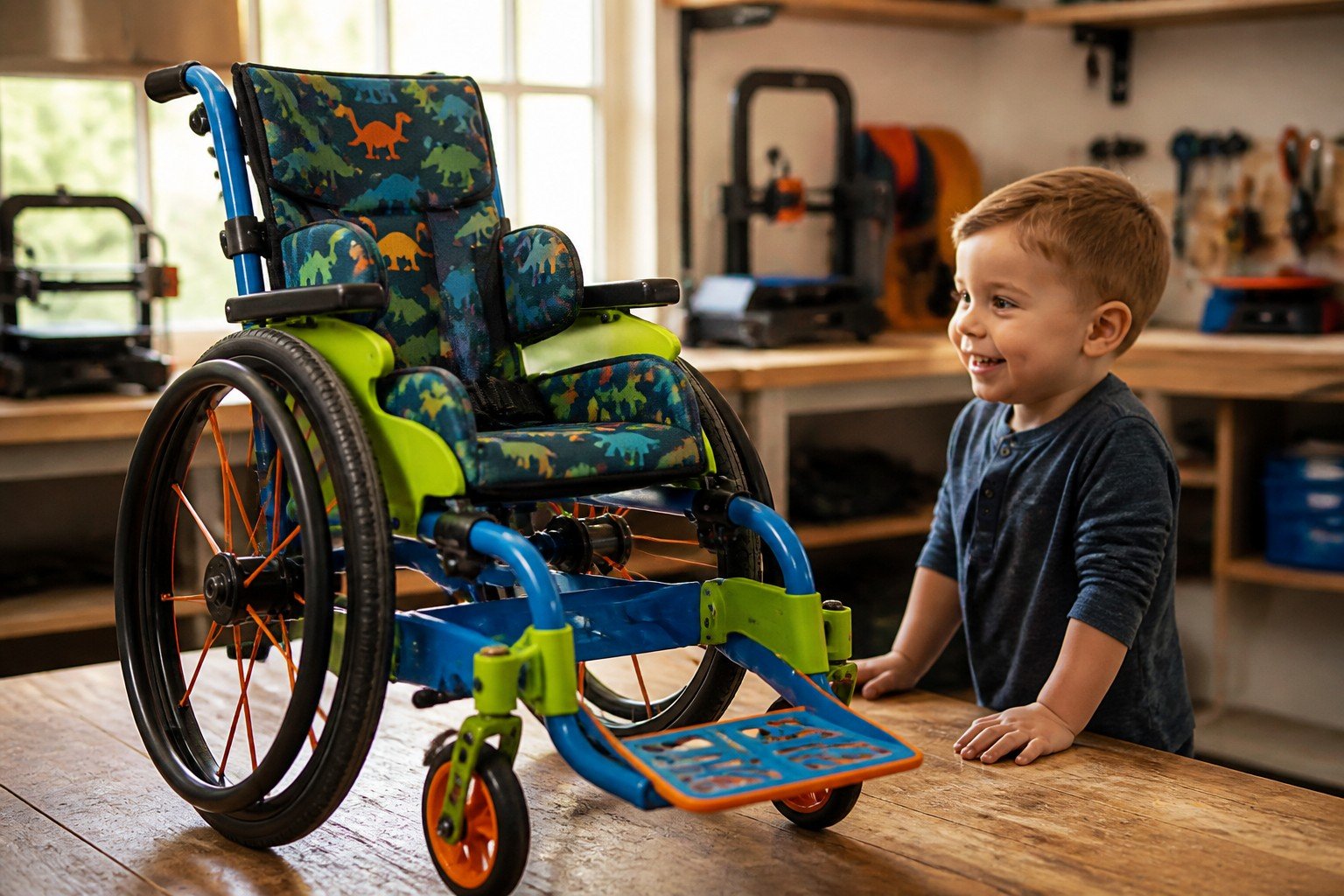
A Wheelchair Built With Heart
Enjoy this city scene as a free online jigsaw. Pick your piece count and start solving in your browser.
This city jigsaw runs entirely in your browser. Choose difficulty on the play screen, use the optional timer to race your best score, or upload a personal photo for a custom puzzle anytime.
No download, no account — just tap play and start placing shaped pieces on the board.
A Wheelchair Built With Heart
Traditional pediatric wheelchairs can be costly, and children outgrow them quickly — a hard combination for families who need equipment that fits today and again a few months from now. In recent years, makers have turned to 3D printing to build lighter, custom-fit mobility gear: frames and parts sized to a child's body, finished in cheerful colors, and designed so a worn piece can be reprinted instead of replacing an entire chair.
The appeal is practical and human. Digital designs can be resized as a toddler grows, rebuilt after a break, and adapted for seating or posture needs without waiting on a long manufacturing cycle. Around the world, young makers, hobbyists, and community workshops have taken up the work — printing parts in home studios, sharing open designs, and helping kids nearby roll farther than before.
This free City jigsaw on PuzzleBeat celebrates that maker spirit. Piece together A Wheelchair Built With Heart at your own pace — choose your piece count and play instantly in your browser with no download or account required.
How to play
- Tap Play A Wheelchair Built With Heart puzzle to open the puzzle board, then choose your piece count and difficulty.
- Drag pieces from the tray onto the board and snap them into place until the full image is complete. Works with mouse on desktop and touch on mobile.
- Use the Preview button on the play screen to peek at the full reference image whenever you need a hint.
- When you finish, check your solve time on the completion screen and share it with friends to see who can beat your record.
Frequently asked questions
- How do 3D-printed wheelchairs work?
- Designers model frames and fittings in software, then print plastic or composite parts that assemble into a chair sized for a child. Wheels, bearings, and some hardware are often standard components; the printed pieces carry the custom fit, color, and geometry that match the child's needs.
- Why can 3D-printed chairs be more affordable than traditional ones?
- Much of the cost in conventional pediatric seating comes from specialized manufacturing, fitting appointments, and full-unit replacement when a child grows. Printed designs can reuse digital files, reprint only what is needed, and avoid some of that overhead — though clinical guidance still matters for safe use.
- Who is making these custom chairs?
- A mix of independent makers, hobbyists with home printers, university and community fab labs, and nonprofit or volunteer groups that share open designs. The common thread is local skill plus digital tools aimed at kids who need something lighter, brighter, or better sized than an off-the-shelf option.
- How can someone get involved or request a custom chair?
- Start with a clinician or occupational therapist for safety and fit guidance, then look for local maker spaces, university fabrication labs, or open-source pediatric mobility projects that list volunteer printers and design files. Families and makers often connect through community workshops and online design-sharing networks.