 60 pieces · Nature
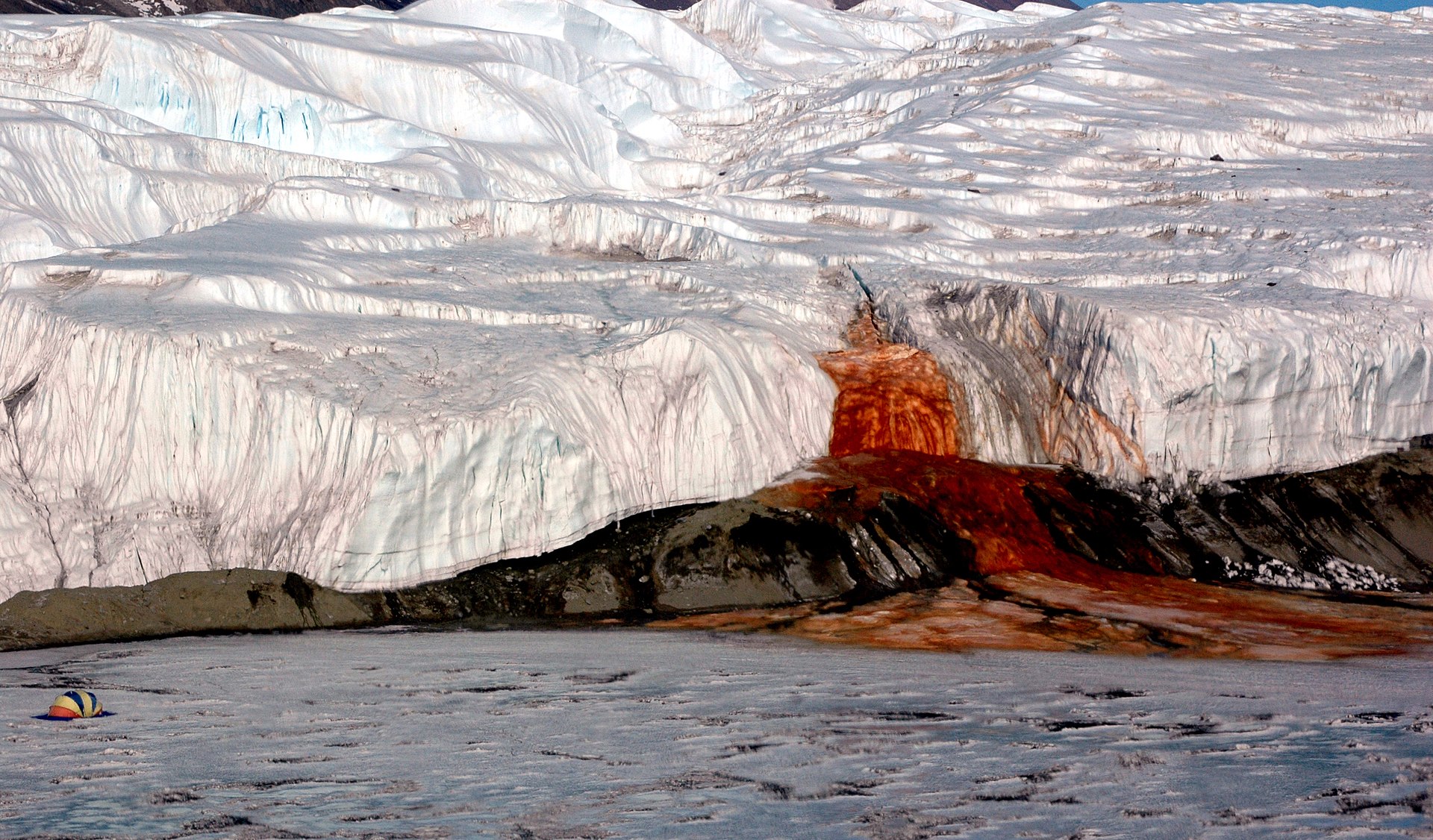
Photo by Peter Rejcek, National Science Foundation (public domain, U.S. government work), via Wikimedia Commons. Blood Falls at the snout of Taylor Glacier in the McMurdo Dry Valleys, Antarctica — iron-rich brine oxidizing to deep red-orange as it seeps from the ice over dark exposed rock, with a research camp tent on the lake ice below giving a sense of scale.
PuzzleBeat
Blood Falls, the Red Stain on Taylor Glacier
Enjoy this nature scene as a free online jigsaw. Pick your piece count and start solving in your browser.
This nature jigsaw runs entirely in your browser. Choose difficulty on the play screen, use the optional timer to race your best score, or upload a personal photo for a custom puzzle anytime.
No download, no account — just tap play and start placing shaped pieces on the board.
Blood Falls, the Red Stain on Taylor Glacier
Blood Falls spills from the snout of Taylor Glacier in the McMurdo Dry Valleys of Victoria Land, Antarctica, staining the ice a deep red-orange where it meets the frozen surface of West Lake Bonney. The Australian geologist Thomas Griffith Taylor found the stain in 1911 while surveying the valley that now carries his name, and early expedition members first guessed the colour came from red algae. It took decades of further study to settle on the real cause: iron dissolved in the water turning to rust-coloured iron oxide the moment it reaches open air. In this photograph the falls run down a dark outcrop of exposed rock at the glacier's edge, the only patch of colour in a frame otherwise made up of white ice above and pale blue-grey lake ice below; a single small tent near the shoreline, part of a field research camp, gives a sense of just how large the ice wall really is.
The red water does not come from inside the glacier itself but from a reservoir of ancient seawater trapped beneath roughly 400 metres of ice, several kilometres back from the visible outlet. Geologists trace that water to the Miocene epoch, around 5 million years ago, when sea levels were higher and a fjord here was sealed off as Taylor Glacier advanced over it. Cut off from the ocean and slowly freezing from the outside in, the trapped water concentrated into a brine two to three times saltier than ordinary seawater — salty enough to stay liquid at temperatures that would freeze fresh water solid, and salty enough that Taylor Glacier is thought to be one of the few Antarctic glaciers not frozen directly to the bedrock beneath it. When this iron-rich brine finally reaches a crack in the ice and meets the atmosphere, the iron oxidizes almost instantly, the same chemistry that turns exposed metal to rust. Researchers who have sampled the brine have also found it hosts a community of microbes that respire by shuttling electrons between sulfate and iron rather than using oxygen, living in permanent cold and total darkness — a metabolism not previously known to occur in nature when scientists first described it.
As a jigsaw, the photograph divides into three very different textures, which makes it easier to sort pieces before trying to connect them. The red-orange stain is the smallest area in the frame but by far the easiest to place, since nothing else in the photo repeats that colour; start there and work outward. The glacier above it is a much larger field of white and pale blue-grey, textured by vertical streaks of dirt and shadow running down the ice — sort those pieces by the direction and spacing of the streaking rather than by colour alone, since most of them are close to the same shade. The dark rock and pale lake ice at the bottom of the frame are the simplest pieces to place last, acting as a stable anchor once the stain and the ice above it are already positioned.
How to play
- Tap Play Blood Falls, the Red Stain on Taylor Glacier puzzle to open the puzzle board, then choose your piece count and difficulty.
- Drag pieces from the tray onto the board and snap them into place until the full image is complete. Works with mouse on desktop and touch on mobile.
- Use the Preview button on the play screen to peek at the full reference image whenever you need a hint.
- When you finish, check your solve time on the completion screen and share it with friends to see who can beat your record.
Frequently asked questions
- What actually causes the red colour at Blood Falls?
- The colour comes from iron dissolved in hypersaline water that seeps out through cracks at the edge of Taylor Glacier. The moment that water reaches open air, the dissolved iron oxidizes into reddish iron oxide — essentially the same chemistry that turns exposed metal to rust. Early 20th-century explorers who first saw the stain guessed it was caused by red algae; it took later geochemical analysis to show the colour was mineral, not biological.
- Where does the water come from, and how old is it?
- The brine comes from a reservoir of ancient seawater sealed beneath roughly 400 metres of ice, several kilometres from the visible outlet. Geologists trace it to the Miocene epoch, around 5 million years ago, when a fjord in this valley was cut off from the ocean as Taylor Glacier advanced over it. Trapped and slowly concentrated by freezing ever since, the water is now a brine two to three times saltier than normal seawater.
- Does anything actually live in that water?
- Yes. Researchers, including geomicrobiologist Jill Mikucki and colleagues at the University of Tennessee, have found the brine hosts a community of at least 17 types of microbes living with almost no oxygen. These organisms appear to respire by passing electrons between sulfate and iron rather than breathing oxygen, feeding on trace organic matter trapped with them — a metabolic process not previously documented in nature. Because the microbes survive in cold, dark, oxygen-starved water sealed off from the surface for millions of years, scientists studying Blood Falls treat it as a useful stand-in for how life might persist in similar brines under the icy surfaces of moons like Europa.
- Who discovered Blood Falls, and when?
- The Australian geologist Thomas Griffith Taylor found the stained ice in 1911 while surveying the valley in the McMurdo Dry Valleys that was later named after him — Taylor Valley, home to Taylor Glacier. His expedition's early guess that the colour came from red algae held for years before later chemical analysis identified iron oxide as the actual cause.